


Meetings and Conferences
HIRAX Collaboration Meeting 2025
The African Institute for Mathematical Sciences (AIMS) in Cape Town hosted the HIRAX Collaboration Meeting from 19-21 November 2025, bringing together national and international participants.
The meeting provided an important platform for participants to review the current progress of the Hydrogen Intensity and Real-time Analysis eXperiment (HIRAX) telescope and discuss ongoing developments across the project. Through a series of presentations, technical discussions, and collaborative sessions, attendees shared updates on key research areas, instrumentation, data analysis, software development, and future project milestones.
Collaboration meetings play a vital role in large-scale scientific projects such as HIRAX. They allow team members to assess progress against project objectives, identify challenges, and develop solutions that support the successful advancement of the telescope. The gathering also created opportunities for researchers to exchange ideas, strengthen partnerships, and explore new avenues for scientific discovery.
As HIRAX continues to move forward, meetings such as these ensure that the collaboration remains aligned in its goals while fostering innovation and excellence in radio astronomy research. The event highlighted the collective effort of the international HIRAX community and its commitment to advancing our understanding of the Universe through cutting-edge science and technology.
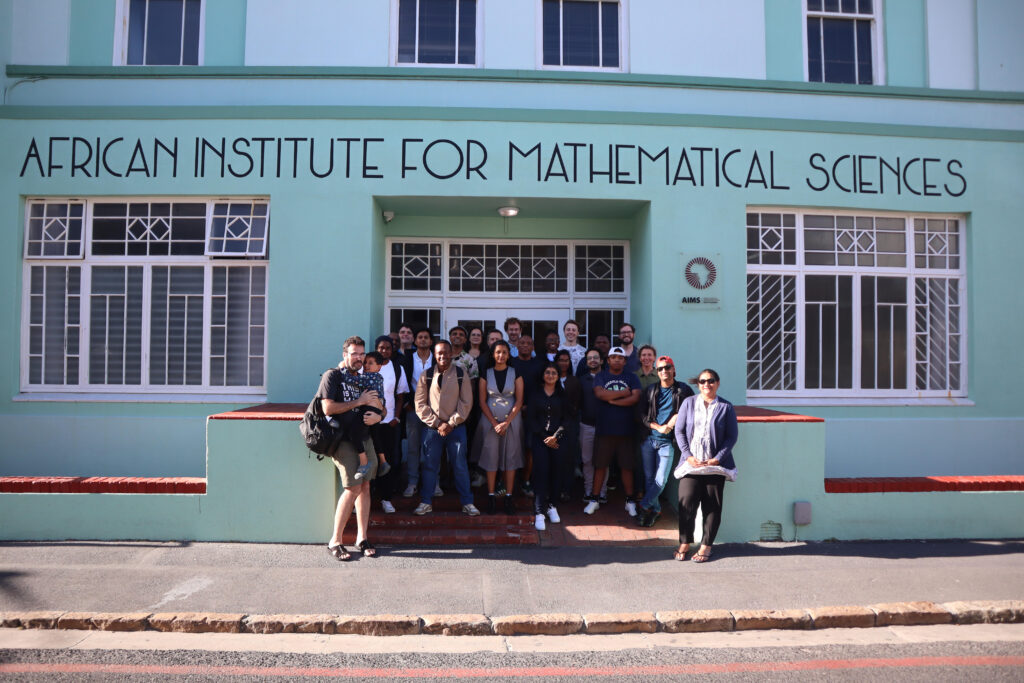
HIRAX Collaboration Meeting 2024
The meeting proved to be extremely successful, attracting more than 50 HIRAX members in person and online. Regular meetings are planned for the future.
The project aims to build a cutting-edge, compact telescope array in the Karoo in South Africa, starting with 128 dishes and eventually expanding to over 1000 dishes.
The main aim of HIRAX is to trace the evolution of dark energy by measuring ripples present in the distribution of hydrogen in the universe. The HIRAX telescope will operate at radio frequencies of 400-800 Megahertz and benefit from the radio-quiet skies in the Karoo astronomy reserve. The telescope array will be hosted by the South African Radio Astronomy Observatory.
The HIRAX consortium is made up of both local and international partners and is led by project’s Principal Investigator, Professor Kavilan Moodley of UKZN.

Inspiring Greatness
- UKZN Home
- Library
- Vacancies
- Directions
- Student Email
- Staff Email
- Telephone Directory
- Tenders
- Directory of Experts
© University of KwaZulu-Natal: All Rights Reserved